
For more than 18 years Alan Greenspan was a strong and effective Chairman of the Federal Reserve. His steady hand helped steer our economy through some rough spots. Inflation was lower and recessions were shorter than they might have been without his leadership.
Bill Clinton
Leave the President’s lack of politesse out of it, and it’s still probably time for a new Federal Reserve chairman; someone as effective as former Fed giants Alan Greenspan, William McChesney Martin or William Volcker. Seriously, Jerome Powell pales in comparison:
- In 19 years (1951-1970), Martin averaged 3.7% GDP growth and $6.1 billion in new federal debt annually
- In 8 years (1979-1987), Volcker averaged 3.6% GDP growth and $200 billion in new federal debt annually
- In 18 years (1987-2006), Greenspan averaged 3.2% GDP growth and $344 billion in new federal debt annually
- In 7 years (2018-present), Powell’s averaged 2.1% GDP growth and $2.1 trillion in new federal debt annually
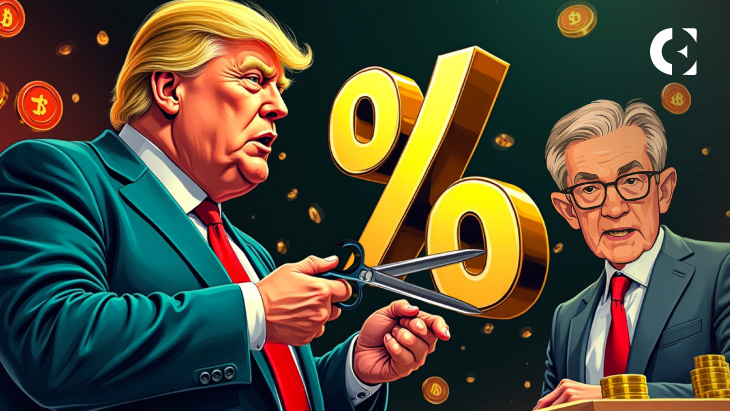
Still, it’s Powell being late to raise rates under Biden, and believing tariffs alone are inflationary, that has him at odds with Trump, whose first-term tariffs did not spike the CPI or PPI. And on Thursday, with annual inflation hovering at 2.7% and tariff receipts up 115%, Senator Scott (R-SC) asked Powell to lower rates so 75 million millennials could afford a home.
Nine months into fiscal 2025, the US Treasury has paid out interest of $921 billion; a problem for 77 million voters, if not for Powell. No way Greenspan ignores that “election mandate” or refuses to work with the winner; to restrain inflation while the President cuts spending, lowers taxes, and re-shores manufacturing. Independence is not intransigence, so it’s probably time for a change.
Whose Side Is He On?
Powell should acknowledge the 2024 election mandate; lower the Federal Funds Rate to avoid last year’s $1.1 trillion interest paid on $35.5 trillion in debt. Trump says Powell can shave “$900 billion” off the annual budget by lowering rates. Not exactly, because the (now) $36.7 trillion in debt cannot be re-financed in one year, but the President has the right idea.
The Treasury is refinancing $9 trillion in fiscal 2025 and, if US interest rates were the EU’s 2.15%, interest payments would be $75 billion lower. No doubt, the President remembers 2018, when the Federal Funds Rate stayed below 2.3%, and interest payments on a $21.9 trillion federal debt were just $357 billion. No doubt, Tim Scott remembers 2018 for 30-year mortgages at 4.71%, not the 6.74% being charged today.
Trade Deficits, Budget Deficits and Interest Rates
The President sees a vulnerability involving trade and budget deficits; the trade deficit has forced we the people to accumulate debt and sell off assets. Right now, foreign entities hold more than $8.6 trillion in US Treasury securities, requiring $150 billion in annual interest outlays. And, in 2024 alone, foreign entities bought $8 billion in farmland, $12 billion in commercial property, and $42 billion in residential real estate. Mr. Trump knows that won’t make America great again.
I know firsthand the President is right about tariffs alone NOT being inflationary, starting with the Walmart Effect, where America’s dominant retailers force producers to either cut costs or lose shelf space. For example, a basic door mirror retailed at $9.95 at Lowes and Walmart in 1988, which is still the price today. Good luck getting a price increase (when my company held firm in 2010, we lost the business and stopped making door mirrors).
My company’s using this same big-buyer leverage on Asian factories to offset Trump’s tariffs. Real example: a table lamp that retails for $199 had a “first cost” of $25 out of Vietnam, and the factory cut $2.50 off their price to offset half the 20% tariff. No other costs changed, meaning we shave 2.2% from our profit margin to hold our $89 wholesale price, lose no customers, and poach a few customers from smaller (dumber) competitors.
Because the US imports $4 trillion annually, the Walmart Effect applies to every industry and almost every foreign producer; eat the cost, split the cost, or risk losing access to America’s $19 trillion consumer-goods market. That leverage is reflected in recent surveys that found 66% of US importers expect their foreign suppliers to absorb the tariffs instead of raising prices (source: Blaze Media).
That’s a granular dive into Team Trump’s tariff talking points, which should also include (1) imports are only 13% of the US economy, and (2) COVID-era inflation was primarily driven by global scarcity and Biden’s free-money (low supply + high demand = higher prices). However, Trump’s key talking point is “tariffs can be avoided by buying America-made goods.” That’s the key to his Golden Age Of America.
Trump’s Big Beautiful Idea
Foreign direct investment in US production (now estimated at over $10 trillion) will buy lots of domestic materials and employ lots of Americans. Increased domestic production will generate lots of factory wages and benefits (i.e. healthcare and retirement plans). Replacing imports will allow US producers to scale up; thereby lowering their cost-per-unit and increasing their global competitiveness. It is, quite simply, the Marshall Plan in reverse – and how’d that work out for Germany and Japan?
To anyone who’s never run an operating company, Trump is applying speed-to-market principles to catch global competitors unaware, unprepared and unable to parry with countermoves, and he needs lower interest rates to fuel America’s economic growth now – not later. It’s brilliant – and Jerome Powell needs to get on the right side of this chapter in America’s glorious history.
This Just In…
April seems like yesteryear now that Trump’s trade deals are rolling in: EU…Indonesia…Japan…Philippines…UK…Vietnam…all with favorable terms for the US, which will yield $151.1 billion in tariff income in fiscal 2026 (and don’t get me started on their investments in the US and energy purchases). Well played, Mr. President!