
Retribution: punishment inflicted on someone as vengeance for a wrong or criminal act (ex. “Employees asked not to be named, saying they feared retribution”)
Oxford Languages Dictionary
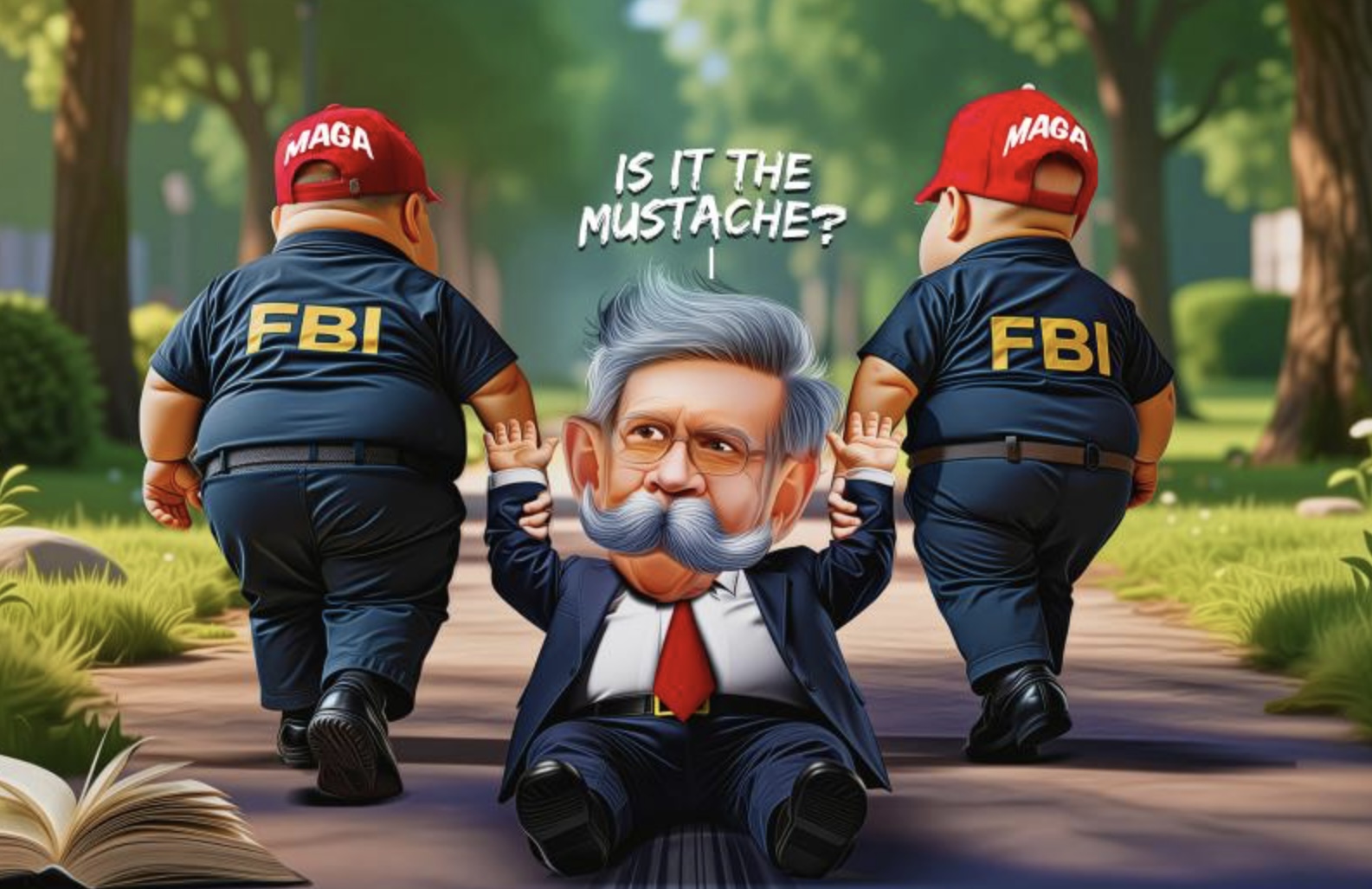
When a federal grand jury indicted John Bolton on 18 counts of violating the Espionage Act of 1917, he joined James Comey (2 counts) and Letitia James (2 counts) on the FAFO (F**k Around and Find Out) casualties list. That’s because Bolton is Trump’s former national security advisor-turned-critic, former FBI director Comey leaked “Trump-Russia” to the press, and New York AG James hit Trump with spurious charges of bank fraud. Bolton now faces decades in prison. Which, of course, elicits sympathy from the legacy media that once scorned him.
CNN broke the news with “Trump’s former national security advisor-turned-adversary.” The Washington Post led with “Trump has embarked on a campaign of prosecuting political foes.” The New York Times opened with “Bolton is among a string of presidential foes to become prosecutorial targets.” Embedded in their stories is “retribution” to suggest Bolton is on an “enemies list” of folks who’ve personally wronged the President. So what? If Bolton, Comey and James have broken the law, don’t they deserve to be punished?
Bolton should be tried, if he illegally stored and transmitted classified information. Comey should be tried, if he lied to Congress under oath. James should be tried, if she made false claims on her mortgage documents. Their transgressions may seem insignificant to some news outlets, but not here. Because all three – Bolton, Comey and James – assumed lofty positions of virtue when they tried to prevent Trump from eventually winning every swing state, 312 electoral votes, and the second most popular votes in presidential history.
That win is the political reality. Still, all three made personal attacks upon this twice-elected president. Bolton did write that Trump was “unfit” for office, Comey did write that Trump was “untethered to the truth and institutional values,” and James did call Trump “this illegitimate president.” Flip the script, reporters and pundits are untethered to the truth and institutional values if they believe Trump’s flaws somehow exonerate Bolton, Comey and James, when all three were indicted by federal grand juries.
The view here is that Trump’s adversaries have for too long made too much of his 2016 debate comment: “You hit me, I hit you back twice as hard.” Yes, he talks a lot of smack – unlike any president in my lifetime – but two unvarnished truths remain:
- Even if Trump is petty or vindictive, it is still a crime to violate the Espionage Act of 1917, lie to Congress under oath, or commit mortgage fraud.
- The lack of intellectually honesty in America’s liberal media has driven their public trust to historic lows (source: Gallup).
Liberal egos clinging to the moral high ground is the primary symptom of Trump Derangement Syndrome. To wit, the woke left believes they are just that right to provide sanctuary to illegal immigrants, justifying their interference with the lawful arrests of criminal illegal aliens. That’s a dangerous thinking trap that’s led them to believe the President is just that wrong about crime, energy, government deficits, healthcare, you name it – – to the point of shutting down the federal government to spite the Republicans in power. How “deranged” is that?
Very, because the rest of the world now sees our president quite differently. Le Monde (France) wrote Thursday of “Donald Trump’s undeniable success on October 13, with the release of Israeli hostages and the cessation of bombing in Gaza.” The Sunday Times (England) wrote that “the very attributes for which the president is often criticized achieved a breakthrough” in Gaza. The West Australian wrote on the 9th that “for the first time in two years, we have reason to hope – the world will have Donald Trump to thank.” Ukrainian President Zelenskyy told the Ukrainski Pravda Saturday, “the President is right, I think we have to stop where we are now.”
This about-face was explained by Le Figaro (France) last week: “We expected an isolationist Trump, focused solely on America’s interests. But in nine months, the President has established himself as a peacemaker in multiple [global conflicts].” That’s an honest skeptic acknowledging actual results and giving credit where it’s due.
This should be the reaction to the John Bolton indictments, because he is as close to a “bad man” as CNN is going to find. Fact: he called what he did (transmitting national defense through personal email accounts) a “very serious national security crime” on CNN when others did just that. He’s as close to a “bad man” as Democrats can find; after the vetting process and daily on-the-job reminders, Bolton cannot claim “no knowledge” of the Espionage Act. The odds of him not knowingly, intentionally or willingly taking and sharing classified information are slim to none.
The DOJ’s prosecution can use the former national security advisor’s own words to prove (1) he systematically shared classified information with un-authorized people in order to (2) write a tell-all book once he was out of office. Indictment documents cite how “Individual 1 set up a group chat that would be used ‘For Diary in the future!!!’ (Bolton’s words)” the day before Bolton took office. Further, “Individual 1 and Individual 2 received more than 1,000 pages of classified information via emails from Bolton” (the recipients were Bolton’s wife and daughter).
I agree with the President that Bolton is a “bad man” because he intended to profit from his access to power and national secrets, and acted premeditatedly to hoard sensitive documents. I remember how hard Bolton lobbied for the position, how often he went off script, and how quickly he poisoned the well. So, maybe Trump calling Bolton a “bad man” is just our commander in chief leveling with we the people.
A little “retribution” against the “bad man” described in the indictments seems like justice, because retribution is defined as “punishment inflicted upon someone as vengeance for a criminal act” (source: Oxford Languages Dictionary). That may sound mean to the snowflakes at the Times, but so does violating the Espionage Act of 1917 when China, Russia, and criminal cartels pay handsomely for our nation’s top secrets.